Tomorrow’s Materials May Already Be Growing Around Us
Fast growth, a distinctive grain and adaptable construction give bamboo a practical role as an alternative furniture material.

Bamboo brings a recognisable warmth to an interior. Its long fibres run across tabletops, follow curved supports and continue down slender chair legs. Alongside these visible qualities, there is a practical reason to consider it as an alternative to conventional furniture timber: the material can be replenished within a relatively short growing cycle.
The International Bamboo and Rattan Organisation’s management manual describes bamboo as maturing in three to five years. Once established, bamboo can provide annual harvests for around 20 years or longer, depending on the species and flowering cycle. Selective harvesting leaves the underground growing system alive to produce new shoots, making careful cultivation central to its value as a renewable material.

Its potential also lies in how it can be worked. Bamboo strips can be bonded into laminated boards, giving makers material for surfaces and components that would otherwise commonly use timber. A 2024 Indonesian study tested laminated boards made from four-year-old betung bamboo sourced in Yogyakarta. In those samples, vertical lamination produced approximately 13% greater bending stiffness than horizontal lamination, showing how construction choices can influence the finished material’s performance.
These findings give bamboo a case beyond its appearance. Its growth cycle offers a renewable supply, while processing allows it to take on different forms. Drying, treatment and construction remain important to its performance. For furniture makers, the opportunity is to work with those qualities carefully, producing objects suited to repeated everyday use.

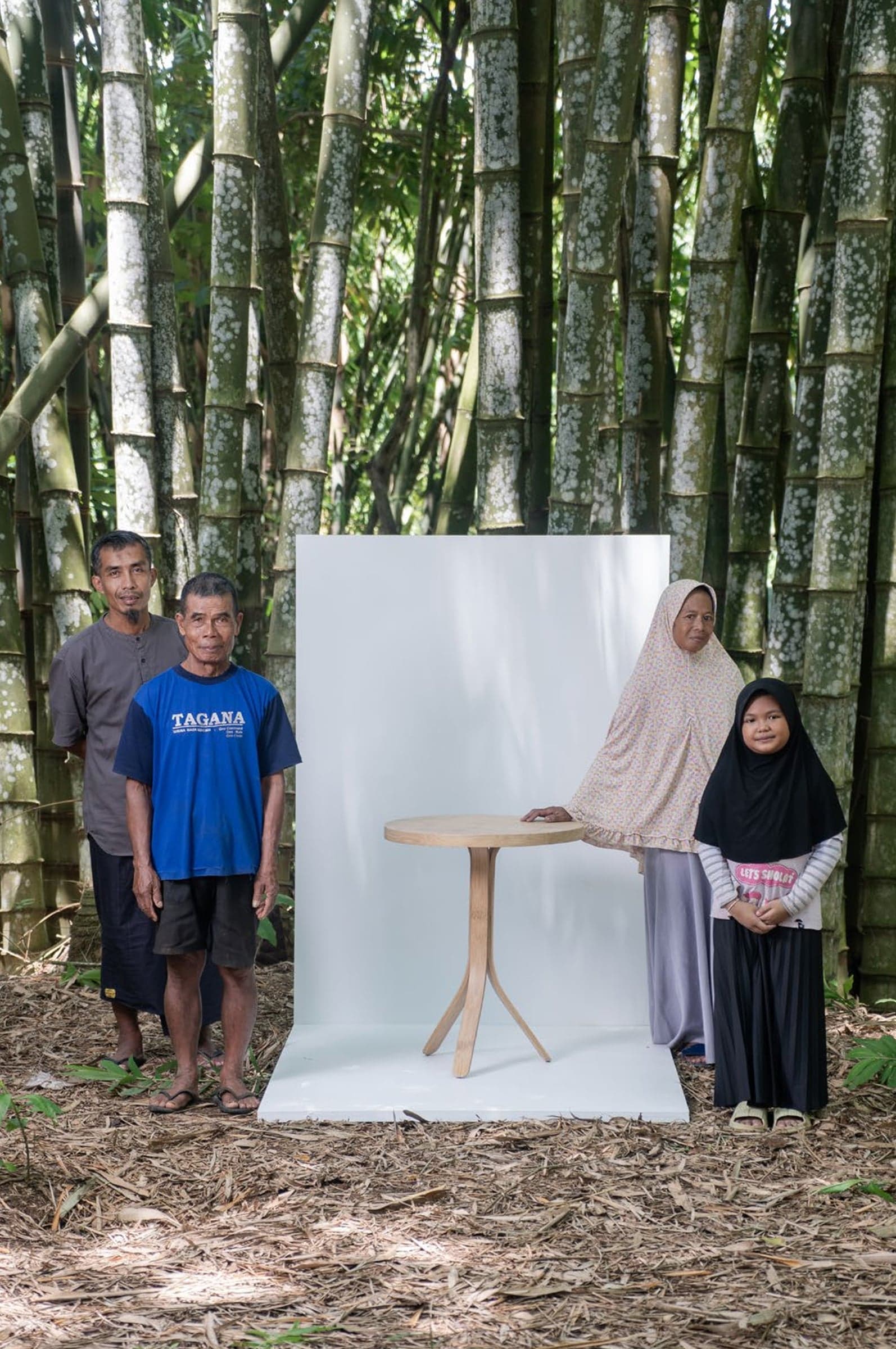
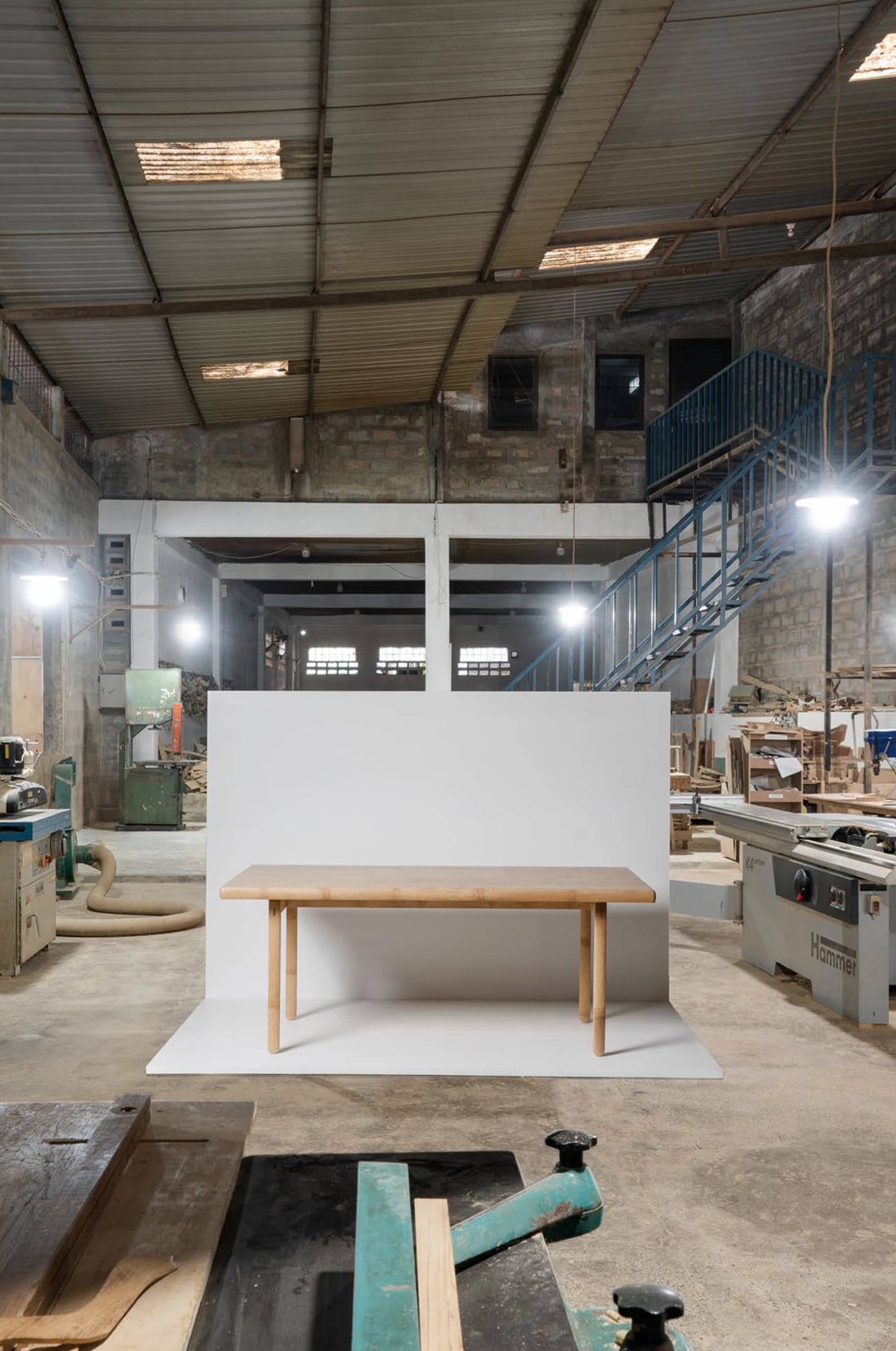
Yogyakarta-based Pring Studio offers one example of this approach. The studio sources bamboo from small households in Gunungkidul and handles production in its own factory and treatment facility. Its plank construction and visible joinery bring the material into chairs, stools and tables, keeping bamboo’s grain and curves present in the finished pieces.
Pring Studio’s collaboration with MYCL adds another material to that framework. The stool pairs a bamboo ring and gently rounded legs with a circular seat mottled in cream and amber tones. The bamboo’s straight grain sits alongside the seat’s irregular surface, bringing furniture craftsmanship and material research together in a familiar object for cafés, offices and shared interiors.