A Material’s Next Chapter Begins with a Living Network
Mycelium can bind agricultural residues into useful forms, offering a different starting point for materials and everyday objects.

The material potential of mushrooms begins with mycelium, the network of fine fungal threads from which they develop. Grown through woodchips or agricultural residues, these threads connect loose particles into a solid composite. The process gives materials left over from other industries another role, with growth becoming part of how an object takes shape.
The growing process can happen within a relatively short period. A 2026 study using Southeast Asian residues, including sugarcane bagasse, woodchips and cassava pulp, reported a 10–20-day growth phase, depending on the mixture. The composites were then dried to stop fungal activity and stabilise the material. In one woodchip formulation, adding cassava pulp increased measured compressive strength nearly fourfold, showing how the recipe influences the result.
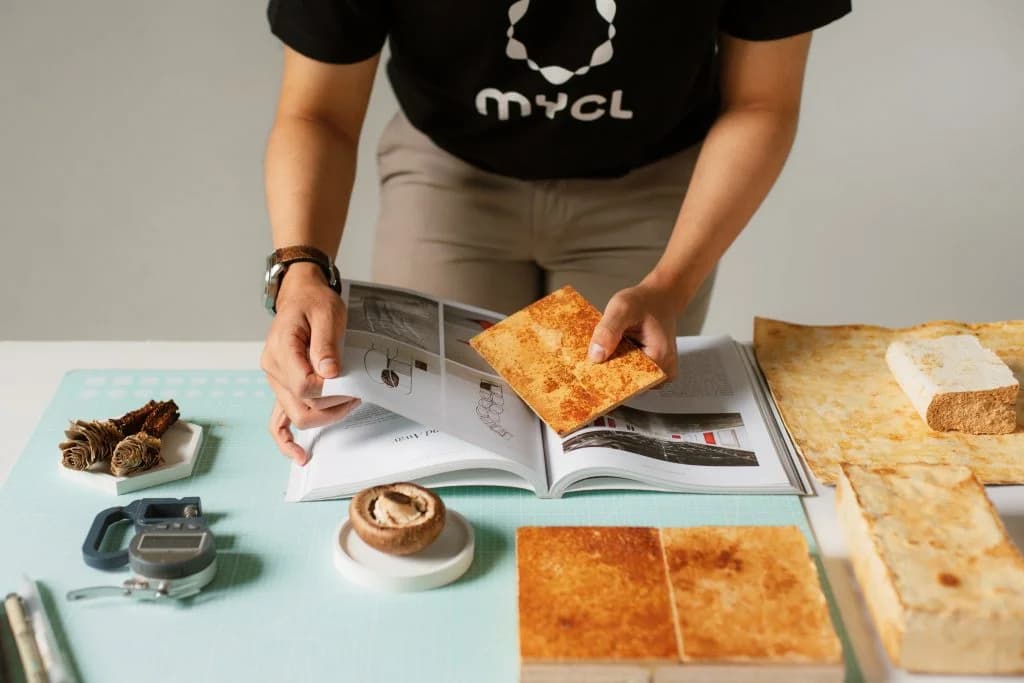
That ability to work with different residues makes mycelium interesting as an alternative material. Researchers are exploring composites for packaging, insulation, acoustic panels and furniture components.
A 2024 study modelling laboratory-scale production in Germany found a lower climate impact than extruded polystyrene and rockwool in the comparisons assessed, alongside lower fossil-energy demand. Land and water requirements were higher, giving a more measured picture of the material’s environmental potential.
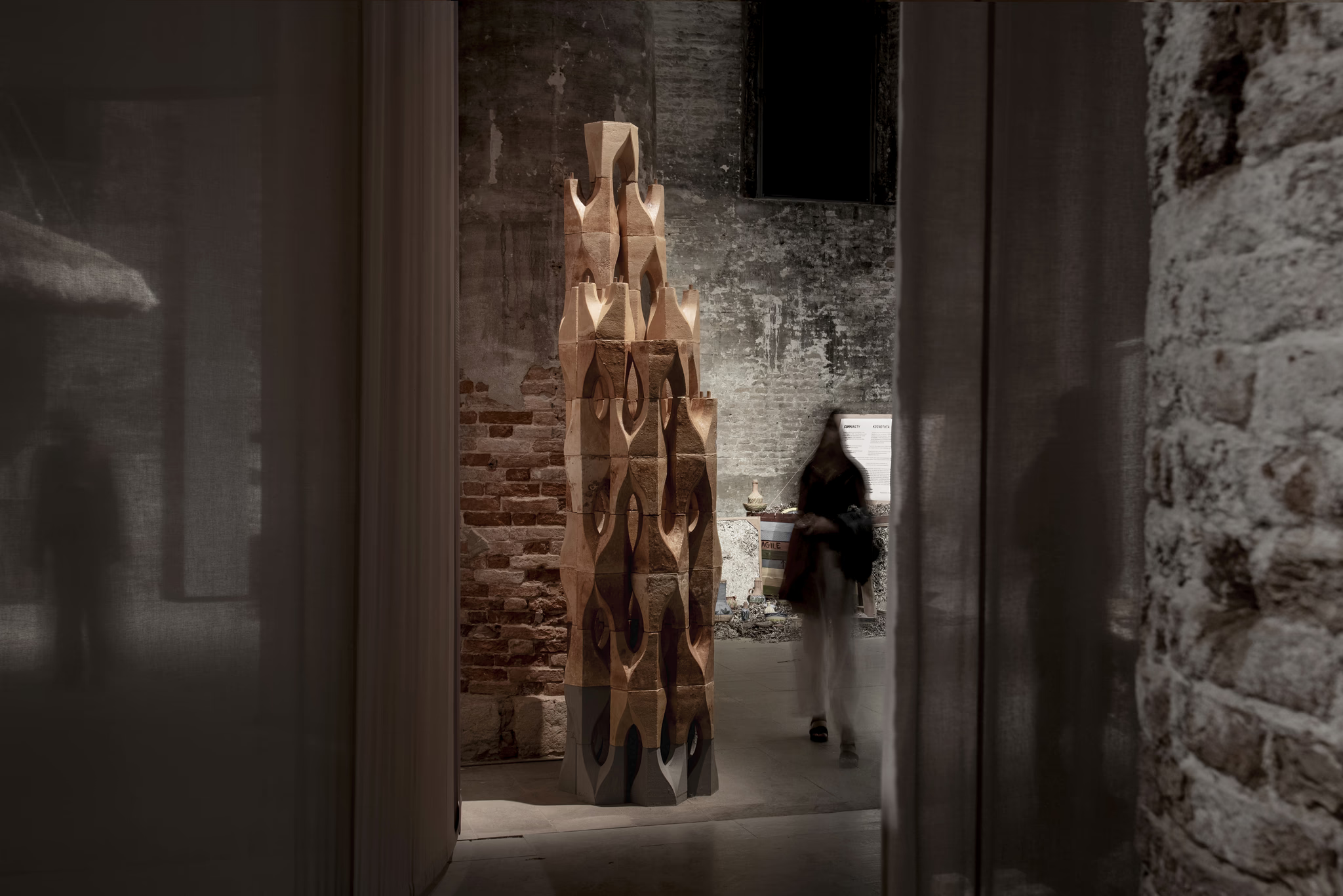
The finished material still depends on how it is made. The fungal species, growing medium, compression and drying process all affect its properties. For designers, this creates room to develop different textures and forms while matching the material to its intended role. The work continues beyond cultivation, through testing and the decisions that turn a grown composite into a useful object.
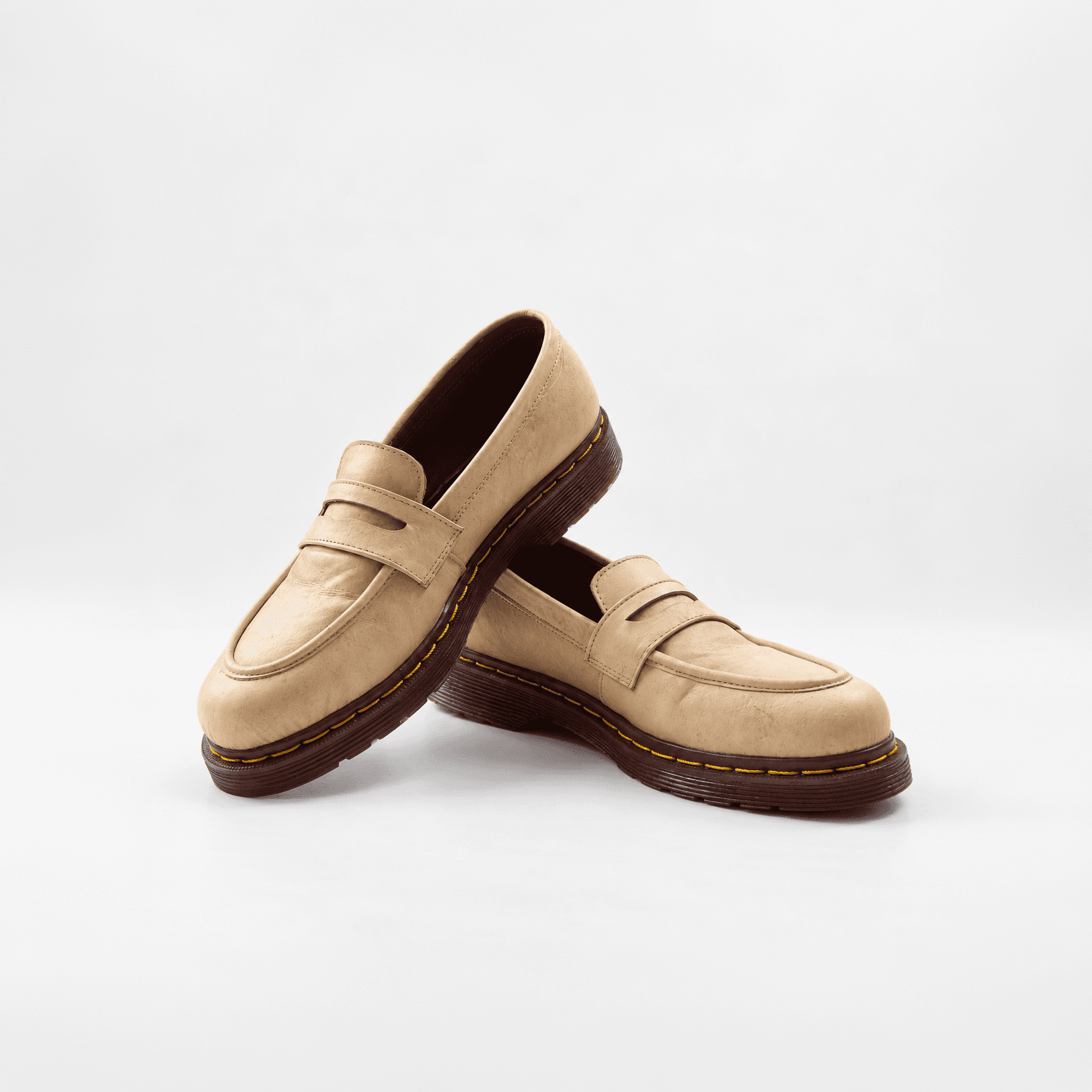
Bandung-based MYCL offers one Indonesian example. Its materials include Mylea, a leather-like sheet; Biobo, a board developed from Mylea production by-products; and MYCL Composite, which can be shaped into solid forms. Together, they bring fungal growth into material development for fashion, architecture and design.
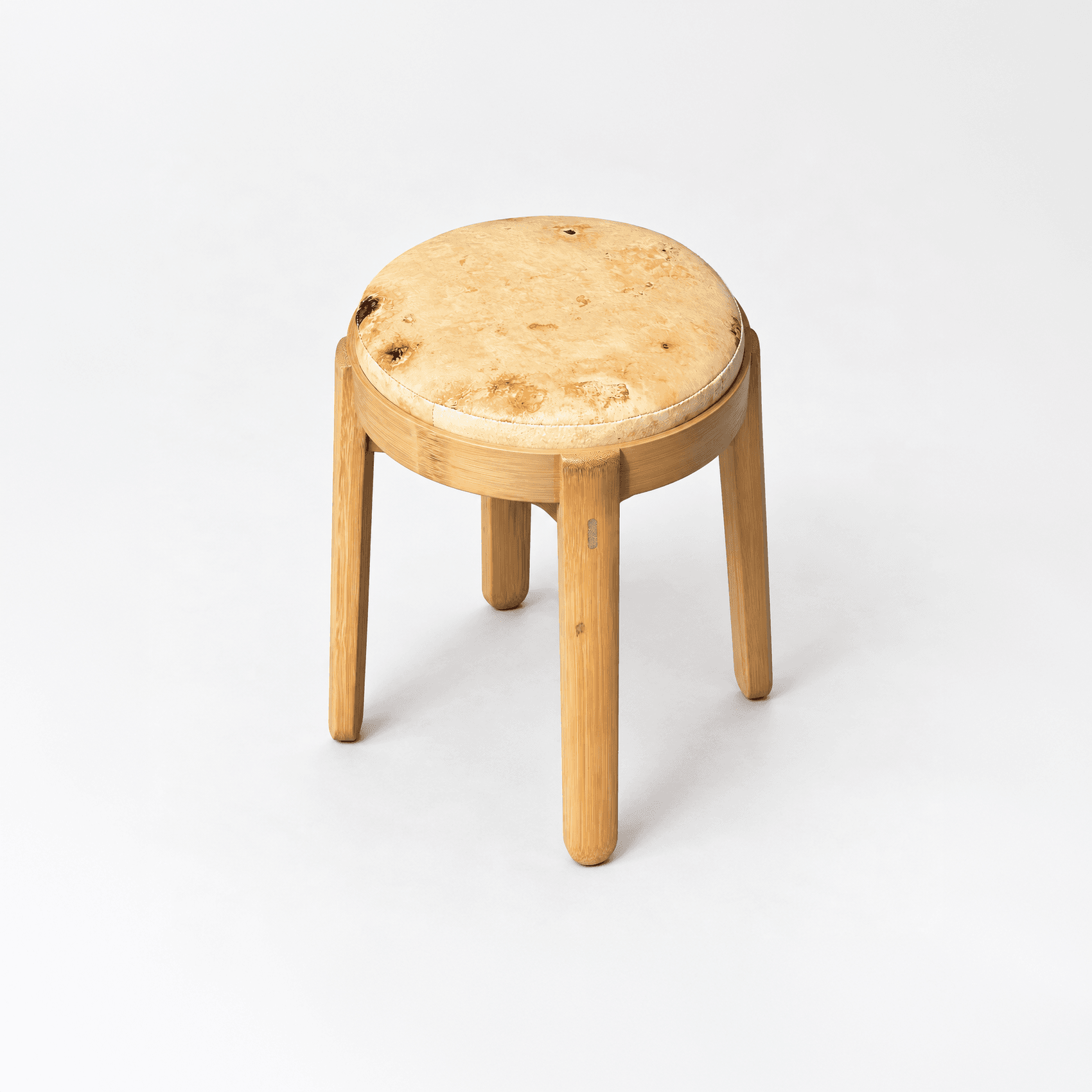
MYCL’s collaboration with Yogyakarta-based Pring Studio brings that research into a familiar stool. A circular seat, mottled in cream and amber tones, rests within a bamboo ring above gently rounded legs. The seat’s irregular surface sits alongside the bamboo’s linear grain, giving the object two distinct textures. Material experimentation meets furniture craftsmanship in a form that can sit naturally within cafés, offices and shared interiors.